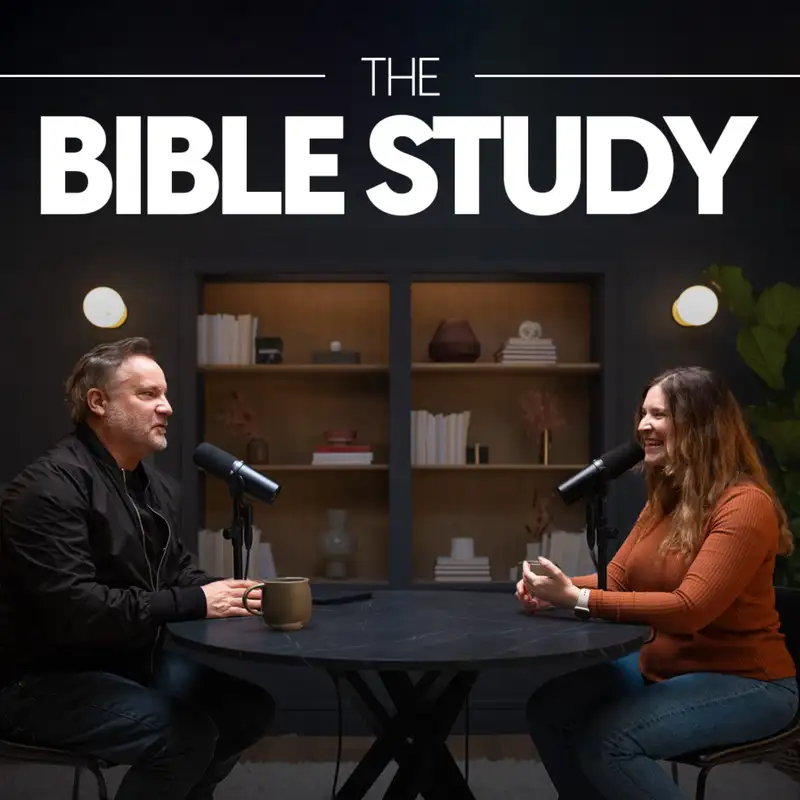
Curt Harlow [00:00:00]:
Hello, and welcome to the Bible Study Podcast on a very, very special Easter edition. That's right. We are going to study the super bowl of all Easter of all Bible passages, and that is the resurrection story. We're going to take the version in Luke, although I'm going to refer to the other gospels here and there. And we, of course, have the frontal lobe of Thrive College. Dena Davidson with us. Dena, remind us again, what is your advanced degree in?
Dena Davidson [00:00:29]:
Apologetics.
Curt Harlow [00:00:30]:
Apologetics. And if there is one area in the Bible that has to be true or the whole rest of the New Testament is in question, it is this area. The opposite is also true. Because this area has such profound impact on apologetics, we can trust so much of the rest of the Bible. So we're going to read the passage here in Luke, and then I'm just going to ask Dena a ton of apologetics questions and love it. And we're just going to strip away the pastel colors of Easter and ask this question. Did this really happen? Now, just to give ourselves some context here, we're doing the Luke version because Luke has got the most words.
Dena Davidson [00:01:17]:
Yes.
Curt Harlow [00:01:17]:
Luke is the wordiest one.
Dena Davidson [00:01:19]:
It's almost always the case.
Curt Harlow [00:01:20]:
It's always the case. Yes. Luke was very concerned about precisely recording, which is really good for our purposes today. Matthew, Mark, and John also have phenomenal insight into this passage. But if you want to really get the most amount of detail, it's Luke who gives it to us. We're going to start in verse one of chapter 24 and go all the way through verse 12, and then we'll range freely between the Gospels as we talk about this. What am I missing as far as context? Dena, anything you want to say in there?
Dena Davidson [00:01:57]:
I just want to remind you the beginning of Luke. He sets out to write an orderly account, and he's specifically writing for a mostly Gentile audience. So I think it's perfect for us to read it, as most of our listeners are in that non Jewish category. And so this is written for us to understand and believe who Jesus is.
Curt Harlow [00:02:16]:
Very good.
Dena Davidson [00:02:17]:
But on the first day of the week, at early dawn, they went to the tomb, taking the spices they had prepared, and they found the stone rolled away from the tomb. But when they went in, they did not find the body of the Lord Jesus. While they were perplexed about this, behold, two men stood by them in dazzling apparel. And as they were frightened and bowed their faces to the ground, the men said to them, when? Why do you seek the living among the dead? He is not here but he has risen. Remember how he told you while he was still in Galilee that the Son of Man must be delivered into the hands of sinful men and be crucified and on the third day rise. And they remembered his words. And returning from the tomb, they told all these things to the 11 and to all the rest. Now it was Mary Magdalene and Joanna and Mary the mother of James and the other women with them who told these things to the apostles.
Dena Davidson [00:03:07]:
And. But these words seemed to them an idle tale, and they did not believe them. But Peter rose and ran to the tomb, stooping and looking in. He saw the linen clothed cloths by themselves, and he went home marveling at what had happened.
Curt Harlow [00:03:24]:
Okay, so there we have it. Straightforward, the Bible claiming that Jesus was completely, entirely put to death on the cross and that he rose and was announced by angels that he had resurrected, that he claimed way back in Galilee, in other words, at the beginning of his ministry, from the very beginning, that he would die and suffer and rise again, and that this was the fulfillment on this. So, okay, let's start with the. From the start, and I'm just going to pepper you with a bunch of questions. Why were the women visiting the grave? And what significance does this have on. On asking the question, is this an actual historical account?
Dena Davidson [00:04:06]:
Sure. So, well, it says on the first day of the week. So the previous verse talked about how, you know, Jesus had been crucified on Friday and then the next day was the Sabbath. And so being Jewish, they had to rest. They couldn't, you know, properly take care of his body. So the women were. Then on the first day of the week, they were Sunday, they were going to go to the tomb and properly care for Jesus's body. And that's why the women were going to the tomb.
Dena Davidson [00:04:31]:
They weren't like, let's see if he's still there.
Curt Harlow [00:04:34]:
Right.
Dena Davidson [00:04:34]:
They were going to take care of their dead Lord and properly care for his body. That's why they were going.
Curt Harlow [00:04:40]:
So they were not. The embalming, to use our word, process was not finished because he died late on a Friday. When the sun went down on Friday, they could not labor anymore.
Dena Davidson [00:04:52]:
Exactly.
Curt Harlow [00:04:53]:
They were on Sunday. So. So the, the fact that there's women doing this, what does that have to do Apologetically? Yes, what it is that have to do apologetics.
Dena Davidson [00:05:03]:
So, well, why were there women, Dana? Yeah, they don't matter. So the, the point of this is that actually gives it historical credibility because of the embarrassment factor. So women were seen as it. It even says it here. This Seemed to them an idle tale. Women were seen as hysterical, emotional. I know no one thinks that these days, but there was this ide. Were far less intellectually, and their testimony was not actually able to be accepted in a court of law.
Dena Davidson [00:05:34]:
And so the fact that the gospels actually tell the story this way gives it historical credibility because of the embarrassment criterion. So essentially, when historians are looking at a text, a historical text, and they're trying to decide, is this. Is this a tall tale? Is this something that people wrote in because they wanted it in? Or did this actually happen because of the high degree of embarrassment that it was women who were the first of the tomb? Scholars think that this is a legitimate part of the story about what the disciples experienced.
Curt Harlow [00:06:06]:
You would never write this story in this version unless it happened this way.
Dena Davidson [00:06:11]:
Exactly.
Curt Harlow [00:06:12]:
And in fact, you try to find your way around this. And yet none of the gospels do try to find their way around it.
Dena Davidson [00:06:18]:
You would skip straight to the part
Curt Harlow [00:06:19]:
where Peter goes, Yes, 100%.
Dena Davidson [00:06:22]:
And you definitely wouldn't include that. Peter did not. And the disciples did not believe them. You know, but these words seem to them an idle tale, and they did not believe them.
Curt Harlow [00:06:31]:
Right. Like, yeah, they acted exactly the way you would expect men to act in that culture in the first century. You mentioned the word, that they were considered hysterical, overly emotional. So we have the surgery on female reproductive parts called the hysterectomy. Hysterical. There's a long, long, long line of this idea that women are not credible witnesses. And yet here we have the most important moment in history. And the whole thing that Christianity is based on and the account is that there were some women that did not fear for their lives and were the very first witnesses.
Curt Harlow [00:07:10]:
Okay, let's clear one other question up here. So the Jesus said the Bible claims that he'd be dead for three days. This did not seem like a full three days. Dino, what's the. What's the deal with that? He dies later on Friday. They're there. Sunday morning. Seems like a day and a half to me if you add it all up.
Curt Harlow [00:07:27]:
So what's going on? Is the Bible contradicting itself?
Dena Davidson [00:07:29]:
It's just that Jesus had a really bad weekend is what it seems. No, I don't think it's contradicting itself. That was one of my theology professors. He's like, we start with this idea of God dying, and then you fast forward it, and it's like, half of a third of God had a bad weekend. Like, that's what we're talking about here. Good theology, joke but no, I don't think so. I think that this is actually the case of we put into the Bible what we want it to mean. Three days has to mean three 24 hour periods.
Dena Davidson [00:07:59]:
We're all about those hours. Right. But that's not the essence of what God was attempting to communicate to us. He wanted them to know the amount of time they had to wait for their Messiah to rise from the dead.
Curt Harlow [00:08:12]:
Right.
Dena Davidson [00:08:12]:
Which they didn't even believe and understand when he said it. But looking back, they understood three days. Just like Jonah was in the belly of the big fish. Three days. There's all of these, we'll call them Easter eggs throughout the scripture. And those three days was one of the things that the Bible said for us to look for. How would you respond?
Curt Harlow [00:08:31]:
Well, our perception of time is different than their perception of time. So we, we love bullet points. We love analytics, we love. We have a much more materialistic mind. So our interpretation of days is 24 hours. It's not 23 and 50 minutes. Theirs was, there will be three days that are touched by this event. So three days were touched by the event.
Curt Harlow [00:08:55]:
Friday was touched by the event. All day. Saturday was touched by the event. And of course, Sunday morning was touched by the event. Therefore, three days. So just keeping on with the, with the questions here in. There's a. And I'm not going to mention any names, but there's a very prominent New Testament scholar and every Easter he puts out a.
Curt Harlow [00:09:18]:
He puts out a podcast and articles. And basically what he does is he argues from other scholars that are all skeptics and says, this is how this happened. So we have this great chapter in the Gospel of John in this story where Peter is hiding out with the other apostles. They're afraid they're going to get killed. And he finally goes, I'm leaving Jerusalem. I'm gonna go back to Galilee. I'm giving up. I'm going back to Galilee.
Curt Harlow [00:09:48]:
So they're like, we'll go with you. So irrationally, all of them go up to Capernaum, supposedly, they find their boats, they go fishing, and then he departs from the Bible historical account there and says, now probably what happened, that Bible's right up to that point, probably what happened after that is Peter had a very euphoric spiritual experience or psychological experience where Christ talked to him and said, I love you, do you love me? And we get that whole passage of if you love me, feed my sheep. And so what, what in a sense started Christianity is this hyper emotional psychotic break spiritual experience where Peter is saying it was almost like Jesus was raised. And then the hyperbole of that gets us to what we believe now that Jesus raised from the grave bodily. Do you see any problems with this theory?
Dena Davidson [00:10:47]:
I do, I, I see a few problems. I studied under a great resurrection scholar named Dr. Gary Habermas and he pioneered what's called the minimal facts method. And so essentially he said I hope
Curt Harlow [00:11:02]:
you're all listening to this episode. This is so good.
Dena Davidson [00:11:05]:
He essentially said our job as historians is to look back in time and try to ascertain what happened. He's. And then he gave us, he gave the class like a list of I think like 20 things that pointed to the resurrection of Jesus. He said we're not going to build our resurrection account on the basis of these 20 things. We're just going to pick a few of them. So he said we're going to build our argument that the resurrection, the bodily resurrection of Jesus actually happened on the empty tomb. That the tomb was empty or Jesus's death. The empty tomb.
Dena Davidson [00:11:41]:
The disciples experiences we're going to. I'm forgetting one of the four. But those were the three. Oh, and Saul's conversion. So those are the four that they're. That Jesus died, that the tomb was empty, that the disciples had experiences of what they thought was the risen Lord. And then a man named Paul who once persecuted the church had an experience of the risen Lord. He said on the basis of those four minimal facts.
Dena Davidson [00:12:04]:
The absolute best explanation of those minimal facts is that Jesus Christ bodily raised from the dead and then he went through and he made the most compelling argument for how these four facts are accepted by, by 80 to 95% of New Testament historical scholars. The 80% is the empty tomb. Because once you have an empty tomb, it's actually pretty hard to agree anything but the bodily resurrection. So hear that? Not Christian scholars. Yes, New Testament critical scholars, people who spend their lives studying this period of history and trying to ascertain what actually happened. 80 to 95% of them agree on these four historical facts. So to answer your question in a very long winded way, but hopefully helpful, nothing that that person just said honors those four historical facts. So his account is fighting the best of what can be known in history.
Dena Davidson [00:13:04]:
So am I going to trust one random guy's interpretation of what was said or what the majority of New Testament critical scholars say actually happened? I'm sorry, but I'm going to go with the historians on this one.
Curt Harlow [00:13:15]:
Right. Not his professor at, in North Carolina. But it's not random.
Dena Davidson [00:13:19]:
But it's not.
Curt Harlow [00:13:20]:
You can kind of try to guess from there who I'm talking about. So I love this fact. So here's.
Dena Davidson [00:13:26]:
Can I say one thing?
Curt Harlow [00:13:26]:
Yeah. 100.
Dena Davidson [00:13:27]:
It's actually a fallacy to say because he's a. Because he's this important person that we should give extra credibility. His. The weight of his claim is the merit of his claim, not the merit of him as the professor.
Curt Harlow [00:13:42]:
That's very, very good. So to me, the. The emotional word picture I use to try to make the same point that you just made is this. We have a. I was going to a Giants game years ago. I'm sitting in the cheap seats in left field, and I'm sitting next to another Giants fan who is drinking like three of the mega beers that they sell there. And he's, you know, he's. He's over the top and he's arguing with every single pitch.
Curt Harlow [00:14:13]:
Every single pitch from left field to home plate. He believes he could see better than the umpire.
Dena Davidson [00:14:21]:
Nice.
Curt Harlow [00:14:21]:
And so.
Dena Davidson [00:14:21]:
And I'm even with all that bearing him.
Curt Harlow [00:14:23]:
Yes. And I'm so kind of like, in the sense we're on the same team because we're both, both rooting for the Giants. But he's. Every pitch, if it's a. A ball and he wants a strike, he's like, you're an idiot. If it's a strike and he wants a ball, you're an idiot. Yeah. And he's yelling at this guy.
Curt Harlow [00:14:37]:
And I realized this is similar to many of the arguments we get against the facts that are easily established or strongly established about the resurrection from 2000 years later. We just don't want it to be true because it would require submission to a fact that is not fun for us to submit to.
Dena Davidson [00:15:00]:
That's right.
Curt Harlow [00:15:01]:
And so, so this idea that. And here's essentially would have a problem with this. This idea that Peter invented Christianity with a euphoric psychological experience. What you want to do is you want to put yourself in charge of calling the balls and strikes on the story. So Jesus died. Okay, so let's start here. There was a Jesus. Oftentimes you will see professors to this day, usually not the.
Curt Harlow [00:15:29]:
In the humanities, but not in any sort of historical expertise. And they'll tell you, you know, there never was really a Jesus. You could still find that today, even though there is zero disagreement on this among scholars. The. The. When scholars study this, like you said, the idea that was there s. Guy named Jesus. Yes.
Curt Harlow [00:15:48]:
We have extra biblical accounts. We have tremendous amount of witness from the Bible Documents. There was a guy at this time named Jesus, arrested by the Romans and crucified. And he was purported to be a person that taught wisely and did miracles. This is not disputed. And yet on secular campuses all the time, you hear people say, you know, it's probably amalgamation of several characters. There was a lot of messiah type figures back then. So.
Curt Harlow [00:16:15]:
So you were, we're calling balls and strikes on that. And then what was the apostles or as close as disciples experience? We're calling balls and strikes on that. We really understand pretty credibly from lots of extra biblical sources and the Bible accounts themselves and their consistency what the apostles experience was. There is not anywhere where anyone says even a hint of they went back to Galilee and after a year, Peter woke up one night with a really vivid dream.
Dena Davidson [00:16:46]:
Right.
Curt Harlow [00:16:47]:
There is no hint of this. And yet what I want to do is say there has to be something here because this massive movement started from it. So I'll take this part of the story, then I'm going to call a ball here and add in just completely from my imagination and no, no sourcing at all, and yet teach it very, very authoritatively. So, you know, who's the guy standing behind the plate calling the balls and strikes? It's Peter.
Dena Davidson [00:17:16]:
Yep.
Curt Harlow [00:17:16]:
It's. It's John, it's Matthew, it's Mark, and it's their disciples.
Dena Davidson [00:17:21]:
Yes.
Curt Harlow [00:17:22]:
I think they got a better view.
Dena Davidson [00:17:24]:
Yes.
Curt Harlow [00:17:24]:
Is the bottom line that's so true.
Dena Davidson [00:17:26]:
Yeah. Habermas said. I asked Habermas, I was like, which of these alternative accounts to the bodily resurrection of Jesus would you believe? Like if you couldn't believe in the bodily resurrection of Jesus if it wasn't an option. He shook his head, he thought about it and he thought, he said, honestly, I would argue for the implausibility argument, the implausibility explanation, he said, I would say that it's so implausible that Jesus rose from the dead that I can't even look at the argument. And I don't have to look at the argument, he said, because as soon as you start studying with any type of curiosity what actually happened and, and you're not just ruling it out from the get go, then there's no getting past the excellent arguments and the really poor arguments for the alternative views. So I think that that honestly is what is going on in the North Carolina professor oftentimes is they're willing to accept very poor arguments and very poor explanations of historical facts because the implausibility of a man bodily rising from the dead is, is so immense to them, they're essentially agreeing with David Hume. No miracle is such that the evidence for it could ever outweigh the evidence that I have experienced in my lifetime against it. Over and over, we see dead man dying and staying dead.
Dena Davidson [00:18:52]:
Over and over and over and over and over again. We never see a dead man rising. So what type of evidence could overturn the implausibility of believing that someone has risen from the dead? Yeah, so what? What can we say to that? As Christians, I think there's a misunderstanding of how we approach history because Hume's argument proves too much. Hume's argument proves that even if the resurrection did happen, it would be wrong for us to believe it. And you don't want a worldview that forces you to go against the facts, that forces you to go against the historical facts. So we can't just stack evidence like I seen dead men stay dead. I've seen a dead man stay dead. I've seen a dead man stay dead.
Dena Davidson [00:19:34]:
Therefore it outweighs this side. You can't just stack evidence. You actually have to weigh evidence. Think about someone who witnesses a murder, right? So it doesn't matter if 15 other people say, I didn't see that person commit the murder. I didn't see that person commit the murder.
Curt Harlow [00:19:52]:
I've never seen a murder ever committed, right?
Dena Davidson [00:19:55]:
Do murders even exist?
Curt Harlow [00:19:56]:
I've had this. I've had multiple relationships and no one was murdered, right?
Dena Davidson [00:19:59]:
But even if you put 15 witnesses on the stand and they said, I did not see that man commit the murder, you can't just stack that evidence. Because what matters most is the person that was in the room who saw the murder happen. And his testimony has to weigh more than everyone else who didn't observe it. And that's what we have in the Gospels. We can't just weigh the evidence of everyone who didn't see Jesus, didn't experience Jesus rising from the dead and didn't have him appear. We have to weigh the evidence of the people who testified. I know this man died and I saw him resurrected again. Just one more thing.
Dena Davidson [00:20:37]:
N.T. wright wrote this great book called the Resurrection of the Son of God. He said, how do you explain Jewish people switching from worshiping on Saturday, right, To worshiping on Sunday? An uncontested historical fact. We Christians, we worship on Sundays. And if you have not read carefully, you know, the Old Testament and even most of the New Testament, you may be thinking that Sabbath is Sunday, right? But it's not. There was a historical moment where Jewish people switched to worshiping on Sunday. What explains that switch? That's the question. That's the historical investigation.
Dena Davidson [00:21:17]:
And the answer is the bodily resurrection of Jesus best accounts for that.
Curt Harlow [00:21:22]:
What could happen to shut down a massive amount of churches and have them all switch to Tuesday worship?
Dena Davidson [00:21:30]:
Exactly.
Curt Harlow [00:21:32]:
This is a historical fact. And not only switch the day of worship, but actually the account says they worship Jesus very clearly on the Ascension and several other places. What makes a Jewish man who gets up every day and recites Deuteronomy, hero Israel, the Lord your God is one God. Worship a fisherman, a guy from a small fishing village in Galilee.
Dena Davidson [00:22:01]:
Yes.
Curt Harlow [00:22:01]:
What, what does that. Okay, so let me go at this. And by the way, I want to point out something you just did there that was really important, especially to the theme of this idea of the Bible study podcast. And getting the Bible right, taking your opponents, taking the skeptics strongest argument is the right way to go about this. So, you know, like, you hear people all the time say, you know, there's no real atheists that are atheists intellectually. They just all fear a relationship with God. And, and we both sides, actually. But it's especially grievous when I see Christians do this.
Curt Harlow [00:22:39]:
We set up straw man arguments and then that really hurts, especially our kids and the people that we're discipling. So if they hear the strongest argument against our position, excuse me, from someone other than us, they always feel betrayed. Why, why didn't someone tell me about that? The implausibility argument? Why didn't I hear about that? So just very, very, very healthy thing of going, asking that question of a professor or of anyone saying, if you had to believe in alternative theory, what's the strongest one out there? So let me go with another theory. I. In college, I heard a liberal theologian I barely knew that there was a spectrum of theologians at that point. I was so young in the faith. And he went through, he was giving an Easter message and he went through the beauty of suffering and the empathy of God. And you know, he emphasized the humanity of Christ.
Curt Harlow [00:23:41]:
Very, very good, very positive, and got the end of it. And his summary idea was whether Christ actually rose from the grave or didn't, what does it really matter anyway? In other words, the story itself is powerful. It doesn't have to be historical. What would you say to that, Dena?
Dena Davidson [00:24:02]:
I think there's a verse in the Bible that speaks to that. Paul says if Christ is not raised, our faith is useless. We are still dead in the grave. And it's just like it's a misunderstanding of the whole Bible, like It's not just a misunderstanding of part of it. The enemy, the chief enemy of God is death. Right in the center of the garden, there's the tree of life. And Adam and Eve chose to eat from the tree of the knowledge of good and evil. And what did that produce? It produced death.
Dena Davidson [00:24:35]:
Death. Death is the enemy. Death is the enemy. Death is the enemy. All throughout the Scriptures. And so it means essentially, if Jesus is not raised from the dead, that death still is winning and is battling God and that God has not achieved victory. Death has all has always had two components in Scripture as well. There's the spiritual death and there's the physical death.
Dena Davidson [00:24:59]:
And both are very much the enemies of God. And it's so easy to trace historically this idea of devaluing the human body to say, ah, it's really the spiritual that matters to God and should matter to us. Well, in a very weird way, you're just adopting. You're adopting two things. One, you're adopting Greek Hellenistic philosophy and importing it into the way you view the Scriptures. But you're also taking our current view of materialism, which is. Which elevates the physical. And you're trying to read the Scripture through those lenses instead of taking off of those lenses and saying, not what my culture says, not what the Hellenistic Greek philosophers say, but what is the God of the universe that understands the true nature of reality? What is he saying? And so, in short, it really matters because death has not been defeated if Jesus did not bodily rise from the dead.
Dena Davidson [00:25:56]:
And we only have spiritual victory. We do not have physical victory. But I'll tell you what rubs is when my, when I see people physically die, it tells me about the spiritual death, but the experience of physical death is absolutely devastating. And so I want Jesus to have victory over both. And I think that's the story that the Gospels clearly proclaim that Jesus has conquered both physical death and spiritual death.
Curt Harlow [00:26:26]:
That's so very good. So let me just go right now. There's a good little debate going on in evangelical circles because a popular teacher that has got a lot of great books out there has kind of come down on the side against substitutionary atonement. The idea that my sin creates injustice, and, and that injustice is intolerable to God, and therefore God has to punish that injustice and he substitutes his son, Jesus. And the idea here is that, of course, if there's a God who's willing to murder his son to make me justify that as a cruel and inhuman God. Where do you fall on this issue, Dena?
Dena Davidson [00:27:12]:
I Mean, I think that substitutionary atonement is not the only aspect of atonement, but I do think that it is the central one in the Pauline epistles. And so since we have the most of our theology from what Paul explicates to us, right, about what was taught in the first century, I think for us to move away from substitutionary atonement is a, is a huge error. I understand the critique. The critique ultimately comes from a lot of people who are deconstructing their faith right now because, because they believe at the heart of the Christian religion is violence, that the Christian religion teaches that God is violent, and that part of that violence is this concept of substitutionary atonement. So I understand the impetus to kind of walk away from that doctrine, but I, I think it's a mistake and it's not faithful to the Scriptures. I think we can elevate the other aspects of atonement, such as Christ being victor over darkness and evil, and Christ bringing us into a state of adoption without downplaying the substitutionary nature of God's atonement. Essentially, if, if Christ, if it was not necessary for Christ to die, then why did he die? So if you're going to walk away from substitutionary atonement, then I think that you are, you're missing some of the heart of what God so clearly teaches from the Old Testament to the New Testament. Probably the greatest question for those that are trying to walk away from substitutionary atonement is what should Christians make of the whole Old Testament system of sacrifices? Because penal substitutionary atonement is, is scaffolded and foretold so strongly in the Old Testament.
Dena Davidson [00:28:59]:
And I just think that there's no good answer to that for those that are trying to walk away.
Curt Harlow [00:29:03]:
I really like your answer because this is the fallacy of, of either or. But I clearly, you know, if you say to me, you know, it's just substitutionary atonement, and, and Jesus is not a moral example to us. He's just paying a price. Don't fall. Morally, of course, I would reject that. Yes, of course I would say Jesus is a, the best moral example. But if he's only a moral example, he's not the Savior. It's the difference between did Jesus die swimming for me in an ocean of storm and chaos that of my own making rescue me, and then because of that he died, or did I just see him in the pool? And he's a really strong swimmer.
Curt Harlow [00:29:55]:
He's such a strong swimmer, he could rescue me. Look how strong A swimmer is. You know, when Jesus on the cross, he said it is finished. The Greek word there is. It's a cry of victory. First of all, people would say that in a cry of victory, in a war, in a battle, in a fight. It's also akin to mission accomplished. But where we see this word most often is on bills, debts settled.
Curt Harlow [00:30:24]:
It is. This debt is settled. And I can't think that Jesus said, this is a victory. But please don't understand the very last thing I say. One of the last things I say, don't understand it in that economic terms as a debt that is paid. I think the problem with asking God to be less violent and asking God to behave in a way that we find more palatable in terms of our ethic, our. Our sense of what is right and good is we anthropomorphize God. We.
Curt Harlow [00:31:02]:
We. We bring him to a level and ask him to be related to us.
Dena Davidson [00:31:08]:
Yeah.
Curt Harlow [00:31:08]:
You know, and it's just a diminishing factor, and we start thinking that way. This is kind of a. This God is kind of too violent for me. Or this God, he judges too harshly there. Or this God acts too dramatically or too. He's too opposed to those. That person or those people. It's a dangerous road to go down.
Curt Harlow [00:31:31]:
As opposed to what you were saying earlier, which is, what does the record say about God? And can I trust this record? Can I trust this account? So, all right, we're coming down to.
Dena Davidson [00:31:42]:
Can I say one more thing?
Curt Harlow [00:31:43]:
Yeah, absolutely.
Dena Davidson [00:31:44]:
I think that the.
Curt Harlow [00:31:46]:
By the way, you don't have to ask that question.
Dena Davidson [00:31:47]:
Okay. Just say. I will say one more thing, Curt,
Curt Harlow [00:31:50]:
Say the one more thing. Dena.
Dena Davidson [00:31:51]:
I think that the Bible teacher you are referring to and other people who have cautions against substitutionary atonement, I think what they're rightly. They're getting right is that the church has paid so much attention to substitutionary atonement that their theological views are higher sometimes and are better understood than the actual Scriptures itself. And that substitutionary atonement, such a spotlight has been shown on it that we've forgotten all these other aspects of the atonement that are very much spoken to in Scripture. And so I think people are rightly reacting against an overemphasis on a doctrine that has overshadowed other parts of what Scripture wants to reveal.
Curt Harlow [00:32:38]:
And.
Dena Davidson [00:32:39]:
And so just back to what you said, it's not either or. We can. We can absolutely rightly understand the atonement in all of its beautiful facets without losing that historical understanding of a primary aspect of the atonement, which is substitutionary atonement.
Curt Harlow [00:32:54]:
Yeah. And I would say it's slightly different, as I say, an under emphasis on the victory of Christ.
Dena Davidson [00:32:59]:
Yes.
Curt Harlow [00:33:00]:
So if you are only focused on the substitutionary atonement, then what you're saying is I'm just stuck on Friday because.
Dena Davidson [00:33:10]:
Because the death happens.
Curt Harlow [00:33:12]:
Victory over death is. It is Christ died because it is victorious. Essentially, the way I would sum up this entire issue is I had this old professor, Dr. Dan Pakota, and there was a popular song back in the day when I was. Dr. Dan was in my life. And the song was, you came from heaven and earth to show the way. And he would always get up there and thunder, Jesus didn't just show the way.
Dena Davidson [00:33:41]:
That's good.
Curt Harlow [00:33:42]:
He is the way. Well, he is the way for atonement of sin, but he's also the way for victory.
Dena Davidson [00:33:49]:
Yes.
Curt Harlow [00:33:50]:
Jesus is the way for victory. It's not a. It's not just a moral example that he was victorious, that. That he ended up doing the right thing. It is ultimately an expression of his authority. He has victory over death. Death is submitted to the Creator in the person of Jesus Christ. We get that manifest, and it's beautiful.
Curt Harlow [00:34:14]:
All right, how do we sum this up, Dena? We are. We're watching this in and around Easter. You could be watching this anytime, these evergrading episodes. But in terms of going into Easter or carrying the idea of resurrection in our lives day to day as Christians, how do we apply all this?
Dena Davidson [00:34:34]:
So verse 12, it says that Peter went home marveling at what had happened. And so for those that believe in the resurrection, I pray this Easter, you marvel, you show up on Friday and you mourn. But on Sunday, you show up and you marvel, you worship, you proclaim Christ's victory over death. It says, paul says, where, O death, is your victory? Where, O death, is your sting? I pray that that be the triumphant reaction of your heart to Easter is death has been defeated thanks to Jesus rising from the dead. And then, if you're a skeptic, if you listen to this and you're gonna go Google North Carolina professor and give him, as you should, a fair shot to give his own view. I pray that you would marvel at what had happened. I pray that you would ask the honest question as Peter, who had every reason to see the empty tomb and on the spot, believe he didn't. He went home and he simply marveled.
Dena Davidson [00:35:37]:
He. I think the sense of this passage is he had a lot of questions and he couldn't stop thinking what happened? What happened? What happened? What happened? And. And I pray that that is the question that our skeptic friend would be obsessed with. What happened?
Curt Harlow [00:35:53]:
Yeah, you stole mine as far as Marvel. So I'm just gonna reiterate it. So. There's a long tradition in Christianity that has been neglected by the Protestant church of meditating on the cross and the resurrection. On, you know, the Stations of the Cross is an expression of this. This idea that I take all of my troubles and my wounds and my hurts, my sorrows and my struggles, and what I do is I try to displace them with thinking about who Jesus was during the Passion Week. And then as that prepares my heart, is that the profoundness of the suffering of Christ prepares my heart. And then I enter in to the resurrection glory.
Curt Harlow [00:36:48]:
And that. That mental exercise marveling is a perfect way to say it is a beautiful thing that you. We should. We should do as Christians all the time, and especially during this very high holiday of Easter. A couple years ago, all of the Thrive students watched one of the Jesus movies that's out there, and it's the. It's the one that doesn't have any resurrection in it. It's just a. It's the Passion of the Christ.
Curt Harlow [00:37:15]:
Whatever you feel about Mel Gibson, they watch. They all watch the Passion of the Christ. And so the next day I was with him and I said, what did you guys think? What did you guys think of that movie? And to a person, they all went, oh, that was so depressing. So it was horrible. Why couldn't they get resurrection in there? And I was like, you guys, this is the point. Sit in it. Yeah, sit in it. And not just the Passion Week.
Curt Harlow [00:37:42]:
Even the. Every breath Jesus took on this earth was a sacrifice for us. Every moment from infancy to resurrection was him not grasping at heaven, but instead becoming a servant. And not just any ordinary servant, but a servant all the way unto death. And not any ordinary death, but death on the cross. Philippians too. So just. I would just say the same exact thing.
Curt Harlow [00:38:10]:
Sit in it, let it. Marvel at it. And then when Easter comes around, let come out of that sacrifice, that suffering, that humility into the. At times hard to believe because it's too good of news that Jesus has put death to death.
Dena Davidson [00:38:35]:
Amen.
Curt Harlow [00:38:36]:
So good, Dena. So good. You are truly the frontal lobe of Thrive school. And not just thrive College, but lots of things. Team Meister. What. What do we got next? We dropping that Thrive college episode next? You know that will be next. That will be next.
Curt Harlow [00:38:52]:
Okay, so thank you for joining the special Easter edition. We got a really cool podcast for you on the next one we recorded a couple weeks ago where we're going to let Thrive students ask any questions they want to ask of us. I think that one goes a little bit longer than normal. Super, super interesting. If you just want to get into some of more of these sort of ideas of what are the questions that are the hardest to answer and and the most incredible to look at, definitely watch that podcast that's dropping after this one and tell someone about this one. In fact, this is a great one to share because there's a lot of people out there that don't realize that there is such credible evidence and arguments for the resurrection. So thank you for watching and please spread the word about the Bible Study podcast.